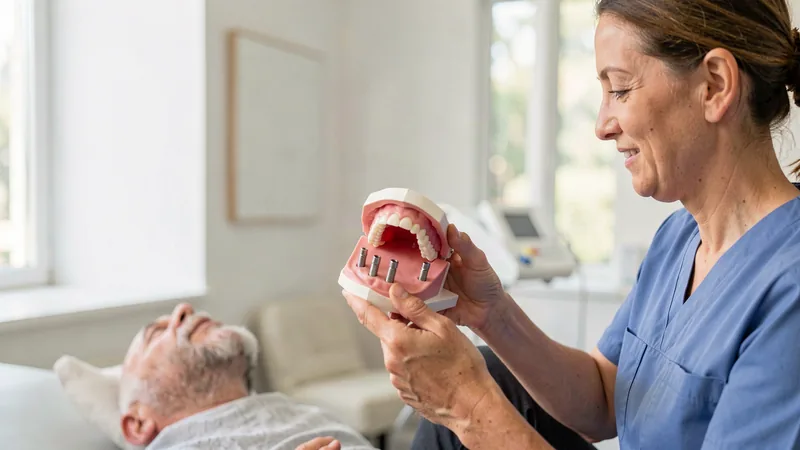
Two Chicago quotes for the same mouth can differ by thousands, and neither has to be wrong. What usually differs is what sits inside the number. The way to compare them is to put the same lines side by side and see which quote is silent on which line, because silence is where the second invoice usually comes from.
Two totals are not comparable until they are itemised
A single figure for an implant does not tell you whether the abutment is included, whether the final tooth is counted, or whether the temporary during healing is part of it. Those are separate pieces of treatment with separate fees, and practices bundle them differently.
So the first move is not to compare totals. It is to ask both practices for the same list of lines, in writing, and then read them against each other.
The lines to watch for first are the ones that are not the implant itself: the abutment, the temporary, the scan and the sedation. Each is a separate fee in the published ranges, and a quote that omits one has not made it disappear, it has only moved it out of sight.
The eight lines a Chicago quote should carry
The components of an implant quote are the same every time it is described properly. Here they are, with what each one decides.
| Line | What to check | Why the total moves |
|---|---|---|
| Implant fixture | Which system, and the fee to place it | Different systems carry different fees |
| Abutment | Included, or quoted as its own line | The line that most often goes missing |
| Final prosthesis | Acrylic, nano-ceramic or zirconia | Zirconia arches sit above the All-on-4 band |
| Temporary | Whether you leave with teeth on surgery day | An excluded temporary arrives later as a bill |
| Graft | Per site or per arch, and how many sites | Published at $600 - $3,000 per site |
| Imaging and planning | CT scan and the plan drawn from it | Published at $100 - $500 |
| Sedation | Which type, charged per visit | Oral sedation is published at $150 - $500 per appointment |
| Follow-up | Review visits and the yearly routine | Peri-implantitis is what those reviews look for |
The fixture and the abutment
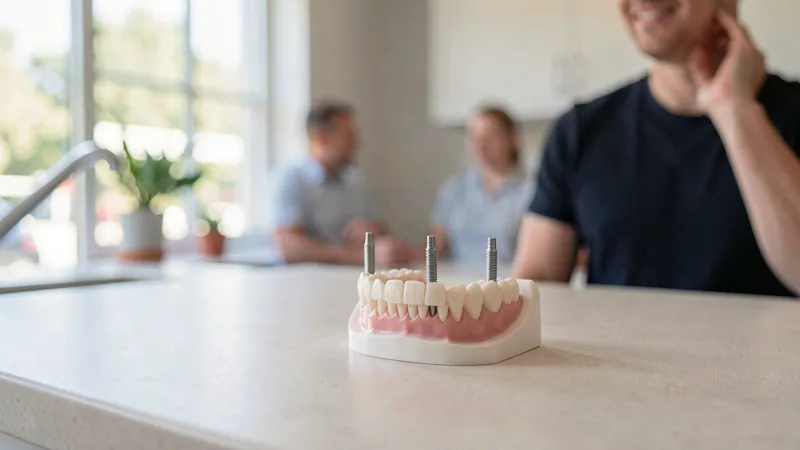
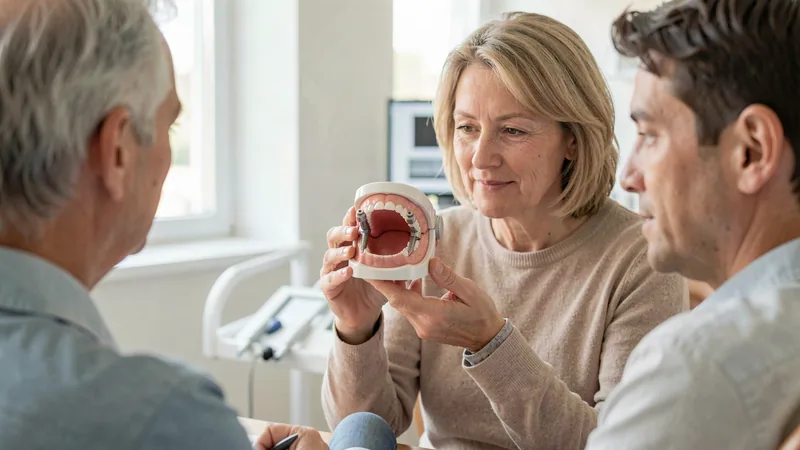
The fixture is the implant itself, placed in the bone. The abutment is the connector between the fixture and the tooth or arch above it. Published single-implant ranges, $3,000 - $5,000 with the finished crown, assume both are inside the number.
So when one quote is markedly lower than the other, check the abutment first. Quoting it separately is not a trick, but it does mean the headline figure is not the finished price.
Ask for the fixture to be named by system as well. Published guides compare costs by implant system, and practices stock different ones, so two quotes can both be honest and still describe different products. A named system is also what lets you check the components later.
The final prosthesis: material and who makes it
Ask what the final teeth are made from and who makes them. Acrylic, nano-ceramic and zirconia all appear in published comparisons for full arches, and zirconia arches are quoted above the $15,000 - $30,000 All-on-4 band.
The second half of that question is who owns the case if something needs adjusting. A prosthesis made in the practice's own laboratory is adjusted by the practice; one made elsewhere travels to be adjusted.
Remember what the published brackets describe: a full arch on four implants runs from $15,000 to $30,000 per arch, with higher-end zirconia arches quoted above that. If one quote sits near the bottom of that band, the material question is the first place to look for the explanation. Ask which of the three materials is in the plan, and whether that choice is fixed when the quote is given or decided later.
Temporary teeth: the line patients meet later
A temporary matters most on full-arch plans, where some cases load a temporary bridge on the day of surgery and the final prosthesis follows once healing is complete. Whether that bridge is inside the quoted fee is one of the most common gaps between two quotes.
Ask directly: do I leave with teeth on the day of surgery, and is that temporary included. On a single implant, ask what the site looks like while it heals and whether a temporary tooth is part of the plan.
On a single implant the same question applies in a smaller way: what you wear while the implant heals, whether that is a temporary tooth or an interim partial, and whether it is included. Ask what happens if the temporary needs replacing during healing.
Graft, extraction and imaging: the lines that arrive after the CT
These three cannot be finalised before the scan. The CT scan and planning are published at $100 - $500, a graft at $600 - $3,000 per site, and an extraction of a failing tooth at $150 - $600.
A quote given before the imaging is provisional, and it should say so on its face. A quote that never mentions grafting has not ruled one out. Ask what happens to the total if the scan shows the site needs rebuilding, and get the answer in writing.
When a practice says the quote is provisional until the scan, take that at face value and ask what the plan does if the scan changes things: which lines can move, by how much, and whether a revised quote will be issued in writing before treatment starts. That answer is part of the quote.
Sedation and follow-up: the two lines nobody asks about
Sedation is charged per visit rather than per implant, so it belongs in the quote even if you do not expect to use it. Oral conscious sedation is published at $150 - $500 per appointment, nitrous sits at the lower end of the per-visit bands, and IV sedation is quoted higher. In Illinois, sedation carries its own permit level on top of the dentist's licence from the Illinois Department of Financial and Professional Regulation, so ask which permit the dentist holds.
Follow-up is the last line. Implants need cleaning and review, and peri-implantitis is the failure mode those visits are looking for. Ask what the yearly routine is and who provides it.
Neither line is decorative. Sedation changes the appointment, and follow-up is what protects the work, so a quote that lists eight lines and leaves these two blank has not finished the job.
Five questions that expose the gaps
What exactly does the quoted fee cover: the implant fixture, the abutment, the final teeth, or only part of that. How many implants are proposed, and what happens to the total if a graft or an extraction is added later. Do I leave with teeth on the day of surgery, and is the temporary included. Who makes the final teeth and what material are they. What is the remake or warranty policy on the prosthesis, and what maintenance is required each year.
Those five, asked of two Chicago practices, produce two quotes that can actually be compared line by line.
Write the answers down as you get them, then set the two quotes side by side in that order. The one that answers every question is not automatically the better one, but it is the one you can hold to a plan.
Who owns the case: one office or two
Chicago practices come in three shapes: general offices that restore implants but refer the surgery, periodontal and oral-surgery groups that place them, and full-arch clinics that run the whole sequence in one location. Which one you are talking to decides whether one quote comes back or two.
Ask who does the surgery, who makes the final teeth, and who you call if something needs adjusting. We are a free matching service, not a dental practice: we introduce you to licensed local implant dentists, and the plan and the fee come from the dentist.
If a practice does both parts, one quote should cover both. If the surgery is referred out, ask for the surgical quote in the same format, including the graft and the sedation lines, so the two documents can be read against each other rather than added up blindly.
Frequently asked questions
What should a dental implant quote include?
Eight lines: the implant fixture, the abutment, the final prosthesis and its material, any temporary teeth, a graft if the imaging shows one is needed, imaging and planning, sedation if it is used, and the follow-up routine. If one is missing, ask where it went and who pays for it later.
Why is one Chicago quote so much lower than another?
Usually because the scope differs rather than the quality. The lower figure may exclude the abutment or the temporary, use a different implant system, plan a different material for the final teeth, or bundle fewer visits. Compare the lines, not the totals.
Is the price fixed once I have a quote?
Ask how long the quote holds and what happens if the CT scan changes the plan, since a graft cannot be priced before the imaging. The published ranges are brackets; the fee is the dentist's, and it should be given in writing.
How do I compare a per-tooth quote with a full-arch price?
You cannot compare them directly, because they are different purchases. A single implant with its crown is published at $3,000 - $5,000, while a full arch on four implants is published at $15,000 - $30,000. Ask the arch quote to list the same eight lines before you set it beside the per-tooth one.
Sources
Related




Dental Implants services in Chicago

All On 4 Implants
All-on-4 is a full-arch option: four implants placed in the jaw, carrying a fixed arch of teeth. Published 2025-2026 United States cost guides put it at $15,000 - $30,000 per arch, with higher-end zirconia arches quoted above that.

Full Mouth Dental Implants
Full mouth implants means rebuilding both arches. Published 2025-2026 United States guides carry per-arch figures rather than a both-arches figure, so a two-arch plan is compared arch by arch, itemised.
Single Tooth Implants
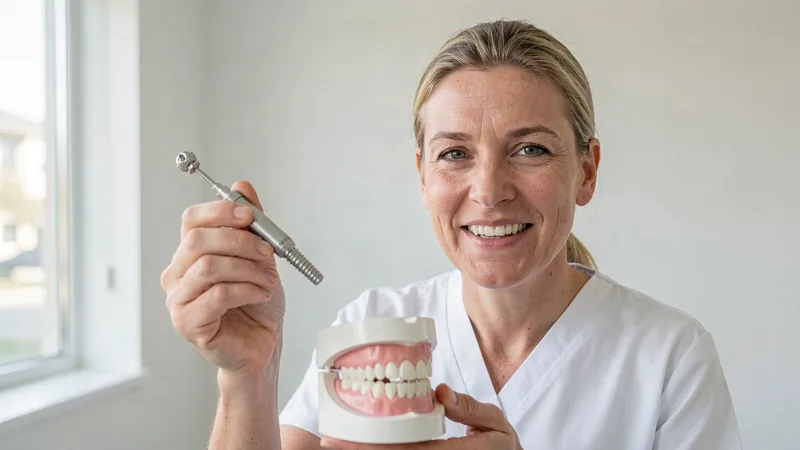
A single implant replaces one tooth: a fixture in the jaw, an abutment, and a crown on top. Published 2025-2026 United States guides put the finished tooth at $3,000 - $5,000, with some guides to $6,000 where a graft is needed.
Implant Supported Dentures
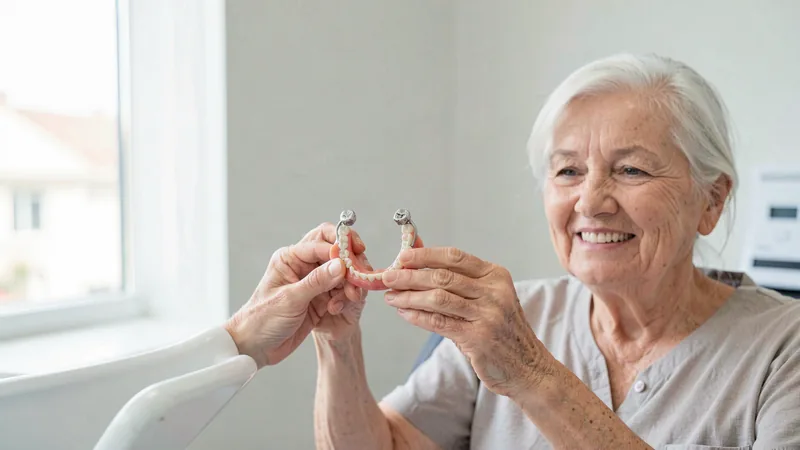
An implant-supported denture is held by two to four implants and still comes out for cleaning. Published 2025-2026 United States guides put it at $6,000 - $15,000 per arch, against $15,000 - $30,000 per arch for a fixed full arch.

Bone Grafting
A graft rebuilds bone where the ridge has shrunk too far for an implant. Published 2025-2026 United States guides put bone graft or ridge augmentation at $600 - $3,000 per site, and the decision comes from the CT scan rather than from how many teeth were lost.

Implant Maintenance
Implants need cleaning and review after they are fitted. Peri-implantitis - inflammation around the implant - is the failure mode that follow-up appointments are looking for, and it is the reason the aftercare side of a quote deserves the same attention as the surgery.
Areas we serve

Chicago
Dental Implants in Chicago, IL - costs, water and soil notes.

Evanston
Dental Implants in Evanston, IL - costs, water and soil notes.

Oak Park
Dental Implants in Oak Park, IL - costs, water and soil notes.
Cicero
Dental Implants in Cicero, IL - costs, water and soil notes.

Berwyn
Dental Implants in Berwyn, IL - costs, water and soil notes.

Skokie
Dental Implants in Skokie, IL - costs, water and soil notes.

Des Plaines
Dental Implants in Des Plaines, IL - costs, water and soil notes.

Park Ridge
Dental Implants in Park Ridge, IL - costs, water and soil notes.

Niles
Dental Implants in Niles, IL - costs, water and soil notes.

Elmwood Park
Dental Implants in Elmwood Park, IL - costs, water and soil notes.

Norridge
Dental Implants in Norridge, IL - costs, water and soil notes.

Lincolnwood
Dental Implants in Lincolnwood, IL - costs, water and soil notes.

Morton Grove
Dental Implants in Morton Grove, IL - costs, water and soil notes.

River Forest
Dental Implants in River Forest, IL - costs, water and soil notes.
Dental Implants tools & calculators
All 10 free Dental Implants tools
Cost calculators, comparisons and checklists. No sign-up.
Cost calculator
Estimate the range for a case in about a minute.

Cost guide
Every published appliance range, in one page.

Consultation checklist
What to bring and what to ask before you commit.

Knowledge quiz
Ten questions on costs, timing and coverage.

Which option fits my situation
Eight questions that point to an appliance path.

Cost & Payment tools
Cost estimator, financing and payment planning, insurance and what you may still owe

Cost & coverage tools
Cost driver planner, insurance and code checker, multi-stage cost planner

Compare & choose tools
Treatment finder and practice comparison scorecard
Prepare & safety tools
Appointment question builder, readiness checklist, medical-history and medication notes
Checklists & Answers tools
Practice questions, records and imaging checklist, second opinion, smile check