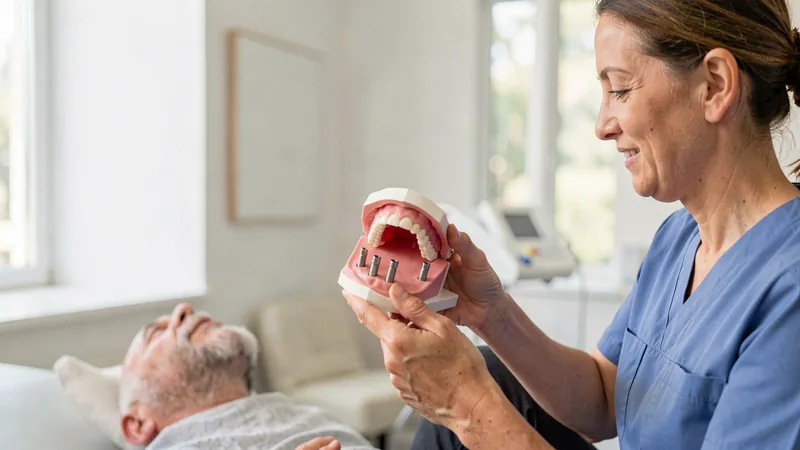
An implant in Chicago is quoted somewhere inside a published range, not at a national average price. The range exists because the treatment is not one thing: it is a surgical component, a prosthetic component, and the imaging and follow-up that hold the two together. Knowing which parts a number includes is the difference between comparing quotes and comparing headlines.
What the published US ranges cover
Published 2025-2026 US dental cost guides put a single implant with its finished crown at $3,000 - $5,000, and some guides go to $6,000 where a graft is needed. An implant-supported overdenture, where two to four implants hold a removable denture, is published at $6,000 - $15,000 per arch.
A full-arch All-on-4, four implants carrying a fixed arch, is published at $15,000 - $30,000 per arch. Higher-end zirconia arches are quoted above that. Those three lines are the ones worth remembering, because they are per tooth or per arch rather than per appointment.
Everything else you will be quoted either sits inside one of those figures or is added on top of it. A graft, an extraction and the CT scan are the usual additions.
Why a per-tooth range and a per-arch range are not the same purchase
The per-tooth figure covers the implant fixture, the abutment that joins it to the tooth, and the crown. The per-arch figure covers the implants, the interim or temporary prosthesis in many cases, and the final arch. They are not two sizes of one product, so a quote that answers a full-arch question with a per-tooth number has not answered the question.
Ask which of the two you are being quoted. Someone with four missing back teeth in a row is usually in the per-tooth world. Someone with no teeth on a ridge and a denture that moves when they eat is usually in the per-arch world, and the per-arch figure is the one that matters.
One more thing separates the two ranges: who does which part. Restoring the crown is general-dentistry work, placing the fixture is surgical work, and the two may be quoted by two offices even when the treatment happens under one roof.
The published ranges at a glance
The published figures on one line each, so the comparison is visible before any appointment.
| Treatment | What it covers | Published range |
|---|---|---|
| Single implant | Fixture, abutment and the finished crown | $3,000 - $5,000, to $6,000 where a graft is needed |
| Implant-supported overdenture | Two to four implants holding a removable denture, per arch | $6,000 - $15,000 |
| Full arch, All-on-4 | Four implants plus a fixed arch, per arch | $15,000 - $30,000 |
| Bone graft or ridge augmentation | Rebuilding one site, per site | $600 - $3,000 |
| CT scan and planning | Imaging and the plan drawn from it | $100 - $500 |
Two of these lines are per site and two are per arch, and adding them in the wrong units flatters a total. A full arch needing grafting at three sites is not one arch fee plus one graft fee; it is the arch fee plus the graft fee for each site that has to be rebuilt.
The six line items a Chicago quote has to show
A quote worth comparing is itemised. Six lines should appear in it, and if one is missing, the question is where it went and who pays for it later.
- The implant fixture, named by system, and the fee to place it.
- The abutment that joins the fixture to the tooth or the arch.
- The final tooth or arch, and the material it is made from.
- Imaging and planning, including the CT scan.
- A graft or an extraction, if the imaging shows one is needed.
- Follow-up visits and the maintenance routine after the final teeth go in.
Temporary teeth during healing, and sedation if it is used, usually sit outside those six as separate lines. Both are easy to leave out and expensive to discover later.
Where the width of the range comes from
Four things move a quote inside the published bracket. The implant system and who makes it. What the final tooth or arch is made from, since acrylic, nano-ceramic and zirconia all appear in published comparisons, with zirconia at the top. How many staged visits the plan takes. And whether the surgery and the prosthetic work are done in one office or quoted by two.
That last one changes the paperwork more than the money. A general office that restores implants but refers the surgery sends you home with two plans from two offices. A periodontal or oral-surgery group that places them, paired with the office that restores, is the same split seen from the other side.
None of those four is a quality signal on its own. The purpose of asking is to find out what two quotes are actually comparing: the same scope at two fees, or two different scopes with one headline number each.
There is no current national fee survey to quote
It is worth knowing why these figures are published ranges rather than a federal fee table. The American Dental Association discontinued its Survey of Dental Fees in 2023, so no current national survey figure exists to cite. The ranges that circulate come from published US dental cost guides, which is why they are brackets rather than prices.
A bracket is the right unit for planning and the wrong unit for deciding. The plan and the fee belong to the dentist, and both arrive after the examination and the imaging.
What that means when you compare a Chicago fee with a figure you read online: both can be true. A published guide aggregates fees that patients report and practices publish, and an individual practice is not bound by an average. The written plan, not the article, is what you are agreeing to.
Insurance, annual maximums and the gap that stays with you
Dental plans commonly cap implant treatment at an annual maximum, and that maximum typically covers only part of a single implant. Some plans exclude implants altogether. Where they are covered, the plan usually pays a fixed percentage of its own allowed amount rather than a percentage of the practice fee, so the gap between allowed and charged stays with you.
Medical plans sometimes cover the surgical part where the tooth was lost to an accident or a medical condition, and FSA or HSA funds can be put toward treatment. Ask which codes will be submitted and what the out-of-pocket total is if the plan denies them.
One practical step before treatment starts: ask the practice to send the plan a pre-treatment estimate. It costs nothing, it arrives while the plan can still be changed, and it tells you the allowed amount rather than the practice fee.
Lower-cost routes that exist around Chicago
Chicago has two dental schools that treat the public at reduced fees: the UIC College of Dentistry and the Midwestern University College of Dental Medicine-Illinois in Downers Grove. Teaching clinics work under licensed supervision, and the trade-off is time, so they are a route to check rather than a shortcut. The NIDCR Finding Dental Care page points to this class of clinic.
Illinois Medicaid adult dental coverage is limited, so it rarely reaches an implant. If a lower cost matters more than speed, ask both schools what they treat and how long the wait runs.
If you are weighing a teaching clinic against a private practice, decide which is scarcer for you: money or time. Reduced fees usually come with appointments spaced around teaching, and the case is treated in stages by students working under supervision, which is what the lower fee buys.
What to do with the number you are given
Ask for the quote in writing and itemised along the six lines above, with a note of what is still unknown. A graft cannot be priced before the CT scan, so the honest version of a quote says that plainly and states what the graft would add if the imaging shows one is needed.
Two quotes at different totals are only comparable when both list the same lines. This site is a free matching service, not a dental practice: we introduce you to licensed local implant dentists, and the plan and the fee come from the dentist.
Keep both versions of the number: the provisional figure you were given before the imaging, and the itemised fee after it. If the two differ, the difference should be explainable line by line, and that explanation is a fair thing to ask for in writing.
Frequently asked questions
How much do dental implants cost in Chicago?
Published US ranges put a single implant with its finished crown at $3,000 - $5,000, an implant-supported overdenture at $6,000 - $15,000 per arch, and a full-arch All-on-4 at $15,000 - $30,000 per arch. A practice sets its own fee inside or above those brackets, so ask for the itemised version before comparing two numbers.
Are those ranges a cap on what I can be charged?
No. They are published brackets, not prices. What a practice charges depends on the implant system, the material of the final teeth and how many staged visits the plan takes, and all of that is confirmed in the plan and the fee the dentist gives you.
Does dental insurance cover implants?
Dental plans commonly cap implant treatment at an annual maximum that covers only part of one implant, and some exclude implants entirely. Where they are covered the plan usually pays a fixed percentage of its allowed amount, so ask which codes will be submitted and what you owe if they are denied.
Can I get a firm price before the CT scan?
Not reliably. Whether a graft is needed is answered by the imaging rather than by the tooth count, so a quote given before the scan can only be provisional. Ask for that provisional figure in writing with the graft priced as its own line.
Sources
Related




Dental Implants services in Chicago

All On 4 Implants
All-on-4 is a full-arch option: four implants placed in the jaw, carrying a fixed arch of teeth. Published 2025-2026 United States cost guides put it at $15,000 - $30,000 per arch, with higher-end zirconia arches quoted above that.

Full Mouth Dental Implants
Full mouth implants means rebuilding both arches. Published 2025-2026 United States guides carry per-arch figures rather than a both-arches figure, so a two-arch plan is compared arch by arch, itemised.
Single Tooth Implants
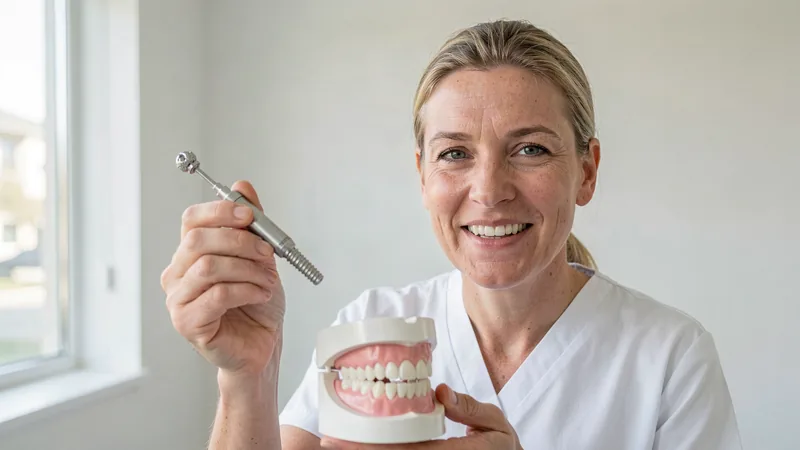
A single implant replaces one tooth: a fixture in the jaw, an abutment, and a crown on top. Published 2025-2026 United States guides put the finished tooth at $3,000 - $5,000, with some guides to $6,000 where a graft is needed.
Implant Supported Dentures
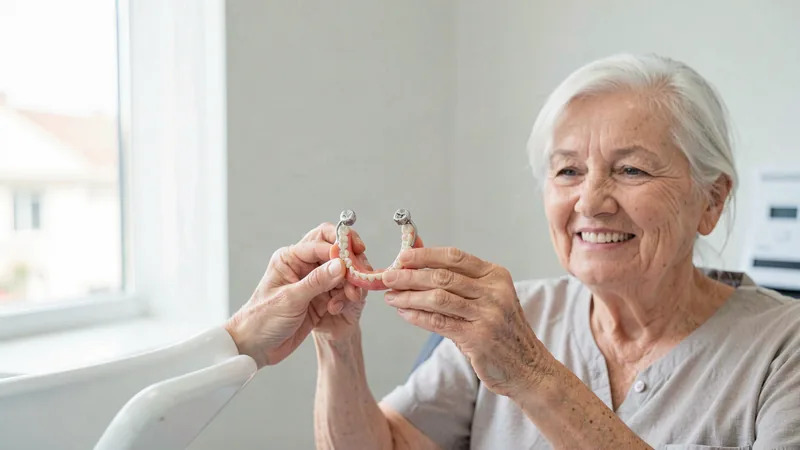
An implant-supported denture is held by two to four implants and still comes out for cleaning. Published 2025-2026 United States guides put it at $6,000 - $15,000 per arch, against $15,000 - $30,000 per arch for a fixed full arch.

Bone Grafting
A graft rebuilds bone where the ridge has shrunk too far for an implant. Published 2025-2026 United States guides put bone graft or ridge augmentation at $600 - $3,000 per site, and the decision comes from the CT scan rather than from how many teeth were lost.

Implant Maintenance
Implants need cleaning and review after they are fitted. Peri-implantitis - inflammation around the implant - is the failure mode that follow-up appointments are looking for, and it is the reason the aftercare side of a quote deserves the same attention as the surgery.
Areas we serve

Chicago
Dental Implants in Chicago, IL - costs, water and soil notes.

Evanston
Dental Implants in Evanston, IL - costs, water and soil notes.

Oak Park
Dental Implants in Oak Park, IL - costs, water and soil notes.
Cicero
Dental Implants in Cicero, IL - costs, water and soil notes.

Berwyn
Dental Implants in Berwyn, IL - costs, water and soil notes.

Skokie
Dental Implants in Skokie, IL - costs, water and soil notes.

Des Plaines
Dental Implants in Des Plaines, IL - costs, water and soil notes.

Park Ridge
Dental Implants in Park Ridge, IL - costs, water and soil notes.

Niles
Dental Implants in Niles, IL - costs, water and soil notes.

Elmwood Park
Dental Implants in Elmwood Park, IL - costs, water and soil notes.

Norridge
Dental Implants in Norridge, IL - costs, water and soil notes.

Lincolnwood
Dental Implants in Lincolnwood, IL - costs, water and soil notes.

Morton Grove
Dental Implants in Morton Grove, IL - costs, water and soil notes.

River Forest
Dental Implants in River Forest, IL - costs, water and soil notes.
Dental Implants tools & calculators
All 10 free Dental Implants tools
Cost calculators, comparisons and checklists. No sign-up.
Cost calculator
Estimate the range for a case in about a minute.

Cost guide
Every published appliance range, in one page.

Consultation checklist
What to bring and what to ask before you commit.

Knowledge quiz
Ten questions on costs, timing and coverage.

Which option fits my situation
Eight questions that point to an appliance path.

Cost & Payment tools
Cost estimator, financing and payment planning, insurance and what you may still owe

Cost & coverage tools
Cost driver planner, insurance and code checker, multi-stage cost planner

Compare & choose tools
Treatment finder and practice comparison scorecard

Prepare & safety tools
Appointment question builder, readiness checklist, medical-history and medication notes

Checklists & Answers tools
Practice questions, records and imaging checklist, second opinion, smile check