A conventional denture, an implant-supported denture and a fixed arch all replace missing teeth, and the published brackets are far apart. The choice usually gets framed as comfort. The part you can compare before any appointment is what each option actually is, what it is published at, and what it asks of you afterwards.
The three options in plain terms
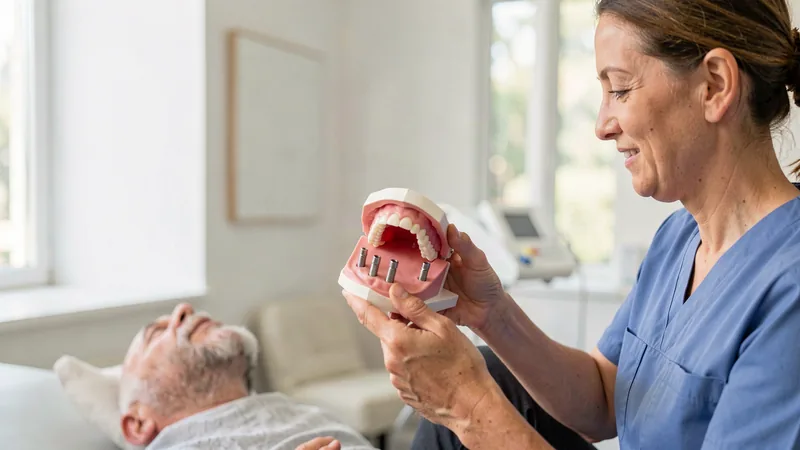
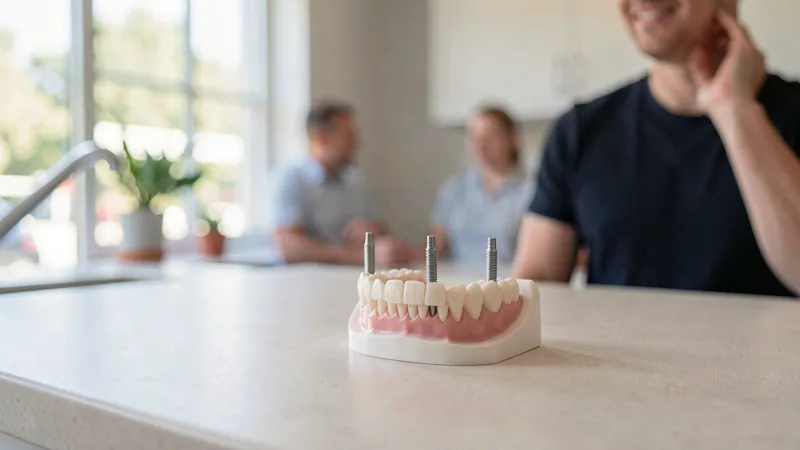
A conventional denture rests on the gum and the ridge, is held by fit and sometimes by adhesive, and you take it out to clean. An implant-supported overdenture uses two to four implants with clips or attachments that hold a removable denture in place; you still take it out. A full-arch All-on-4 uses four implants to carry a fixed arch that stays in your mouth and is cleaned around rather than removed.
None of those is a compromise version of another. They are three different products with different surgical commitments, different cleaning routines and different published brackets.
The cleaning routine follows from that design. A removable prosthesis comes out and is cleaned in the hand; a fixed arch is cleaned around with brushes and interdental aids, and reviewed in the chair. Ask each practice to describe its own routine before you compare what it charges for treatment.
The published ranges side by side
The published figures cover the implant routes. A conventional denture is not part of those brackets, so its price has to come from a practice.
| Option | Held by | Removed by you | Published range |
|---|---|---|---|
| Conventional denture | Fit on the ridge, sometimes adhesive | Yes | Quoted by the practice |
| Implant-supported overdenture | Two to four implants with clips or attachments | Yes | $6,000 - $15,000 per arch |
| Full arch, All-on-4 | Four implants carrying a fixed bridge | No | $15,000 - $30,000 per arch |
Two of those three rows are per arch, which means the number is for one jaw and not for the mouth. A patient who needs both jaws rebuilt is pricing two arches, and the published bracket doubles before any graft is added. Ask the quote to say per arch or per mouth.
What decides it first: the pattern of missing teeth
The starting point is not preference, it is the pattern of what is missing. One tooth is a single-implant question, published at $3,000 - $5,000 with the finished crown. A few missing teeth together may be implants or a bridge, and the dentist decides what the neighbouring teeth can support. All the teeth on one arch, with a denture that moves when you eat, is the overdenture-or-fixed-arch question.
Bring the actual list to the consultation: which teeth, how long they have been gone, and what you are wearing now.
How many teeth are missing also decides how many implants are proposed, and that count drives the fee on every implant route. Four implants on an arch and two implants under an overdenture are different plans at different published brackets, and neither is automatically the right answer for a given mouth.
Bone is the factor that moves every other number
The ridge shrinks after a tooth is lost, which is why a site that has been empty for years may need grafting before an implant can be planned there. Where bone is too thin, a graft or a sinus lift is done first and has its own healing time before the implant stage. That is decided from the CT scan, not from the tooth count.
A graft is published at $600 - $3,000 per site, and the CT scan and planning at $100 - $500. On a full-arch plan the number of sites that need rebuilding is one of the biggest reasons two quotes for the same arch land in different places.
Worth saying plainly: the graft question belongs to the implant routes. If the plan is a conventional denture, the ridge is still reviewed and the fit is managed through relines and remakes rather than through implants.
How much treatment time each route takes
A conventional denture can be made without surgery, so it is the faster route. Both implant routes are staged instead: placement first, then healing while the implant fuses with the bone, commonly three to six months, then the final tooth or arch. Some full-arch cases load a temporary bridge on the day of surgery, and the final prosthesis follows once healing is complete.
Ask for the sequence with approximate dates rather than a single total. A plan that says months is telling you something true; a plan that names a finished date needs its temporary and final stages written out.
Ask for the sequence with the gaps named: how long between placement and the final teeth, how long the temporary is worn, and how many visits sit in each stage. Two practices can describe the same plan and leave you with very different expectations of the year ahead.
The long run, not the entry price
The published brackets are entry prices. A denture is relined and eventually remade as the ridge changes under it, and it is cleaned outside the mouth. An implant-supported overdenture has clips or attachments that wear and are replaced. A fixed arch cannot be taken out, so it is cleaned around in the chair and at home.
Implants need cleaning and review, and peri-implantitis, the inflammation around an implant, is the failure mode that follow-up appointments are looking for. Annual maintenance belongs on the same page as the quote, because it is part of the cost of whichever route you pick.
Put the maintenance on the same page as the quote: what each visit costs, how often it happens, who provides it if you move or the practice changes hands, and the replacement policy for the parts that wear. None of that appears in a headline figure.
Removability is a preference, not a failure
Some people want to take a prosthesis out to clean it, and dislike the idea of something fixed in the mouth. Others find a removable denture tiring and want to stop thinking about it during meals. Both are legitimate preferences, and both are answerable with the options on this page.
Say the preference out loud at the consultation. It shapes the plan more than most of the clinical detail does, and it costs nothing to state.
There is a second preference worth naming: how much surgery you are willing to have. Both implant routes involve placement, and a full arch places four implants in one sitting, while an overdenture plan may need fewer. Someone avoiding surgery altogether is choosing between the denture and doing nothing.
How to take the decision to a consultation
Bring the list of missing teeth, the denture or bridge you wear now, how much time you can give to staged treatment, what you can pay up front and what you can spend each year, and whether you want the prosthesis removable. Then ask for both implant routes quoted on the same case, with any graft priced separately.
We are a free matching service, not a dental practice. We introduce you to licensed local implant dentists across Chicago and Cook County, and the plan and the fee come from the dentist.
If a practice proposes a route you had not considered, ask what it would cost and what it would involve before dismissing it. The published brackets are wide enough that two reasonable plans for the same mouth can sit at very different totals, and the difference is usually scope rather than quality.
Frequently asked questions
Is an implant-supported denture the same as a fixed arch?
No. An overdenture uses two to four implants to hold a denture you remove to clean it. A fixed arch uses four implants to carry a bridge that stays in place. The published brackets differ too, at $6,000 - $15,000 per arch for the overdenture and $15,000 - $30,000 per arch for the fixed arch.
Which option lasts longer?
There is no published lifetime figure to compare, so the useful questions are what the maintenance involves and who pays for it. Overdenture clips wear and are replaced, and implants need cleaning and review, with peri-implantitis being what those reviews look for.
Do I have to choose before I know whether I have enough bone?
The graft question is answered from the CT scan, not from the tooth count. Where the site is too thin, a graft or a sinus lift is done first, published at $600 - $3,000 per site, and it carries its own healing time before the implant stage.
Can I start with a denture and add implants later?
That is a clinical plan decision rather than a price decision, so ask the dentist whether the denture you have can be adapted to implants or whether it would be replaced. Put the question at the consultation and get the answer in writing.
Sources
Related



Dental Implants services in Chicago
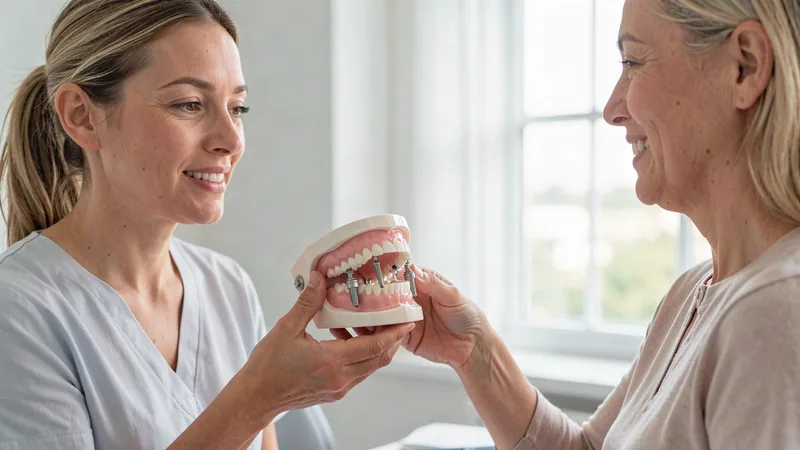
All On 4 Implants
All-on-4 is a full-arch option: four implants placed in the jaw, carrying a fixed arch of teeth. Published 2025-2026 United States cost guides put it at $15,000 - $30,000 per arch, with higher-end zirconia arches quoted above that.

Full Mouth Dental Implants
Full mouth implants means rebuilding both arches. Published 2025-2026 United States guides carry per-arch figures rather than a both-arches figure, so a two-arch plan is compared arch by arch, itemised.
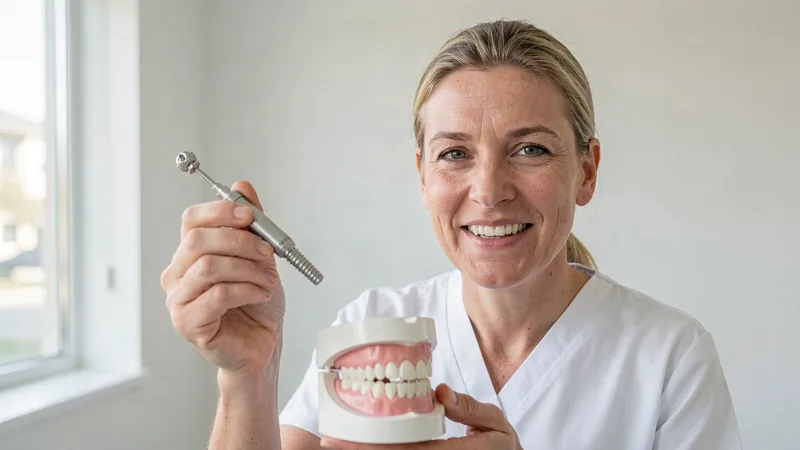
Single Tooth Implants
A single implant replaces one tooth: a fixture in the jaw, an abutment, and a crown on top. Published 2025-2026 United States guides put the finished tooth at $3,000 - $5,000, with some guides to $6,000 where a graft is needed.
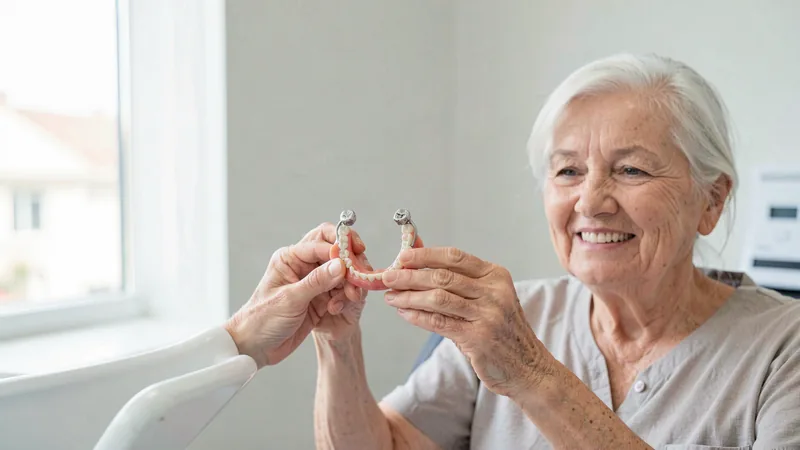
Implant Supported Dentures
An implant-supported denture is held by two to four implants and still comes out for cleaning. Published 2025-2026 United States guides put it at $6,000 - $15,000 per arch, against $15,000 - $30,000 per arch for a fixed full arch.

Bone Grafting
A graft rebuilds bone where the ridge has shrunk too far for an implant. Published 2025-2026 United States guides put bone graft or ridge augmentation at $600 - $3,000 per site, and the decision comes from the CT scan rather than from how many teeth were lost.
Implant Maintenance
Implants need cleaning and review after they are fitted. Peri-implantitis - inflammation around the implant - is the failure mode that follow-up appointments are looking for, and it is the reason the aftercare side of a quote deserves the same attention as the surgery.
Areas we serve

Chicago
Dental Implants in Chicago, IL - costs, water and soil notes.

Evanston
Dental Implants in Evanston, IL - costs, water and soil notes.
Oak Park
Dental Implants in Oak Park, IL - costs, water and soil notes.
Cicero
Dental Implants in Cicero, IL - costs, water and soil notes.

Berwyn
Dental Implants in Berwyn, IL - costs, water and soil notes.

Skokie
Dental Implants in Skokie, IL - costs, water and soil notes.

Des Plaines
Dental Implants in Des Plaines, IL - costs, water and soil notes.

Park Ridge
Dental Implants in Park Ridge, IL - costs, water and soil notes.

Niles
Dental Implants in Niles, IL - costs, water and soil notes.

Elmwood Park
Dental Implants in Elmwood Park, IL - costs, water and soil notes.

Norridge
Dental Implants in Norridge, IL - costs, water and soil notes.

Lincolnwood
Dental Implants in Lincolnwood, IL - costs, water and soil notes.

Morton Grove
Dental Implants in Morton Grove, IL - costs, water and soil notes.

River Forest
Dental Implants in River Forest, IL - costs, water and soil notes.
Dental Implants tools & calculators
All 10 free Dental Implants tools
Cost calculators, comparisons and checklists. No sign-up.
Cost calculator
Estimate the range for a case in about a minute.

Cost guide
Every published appliance range, in one page.

Consultation checklist
What to bring and what to ask before you commit.

Knowledge quiz
Ten questions on costs, timing and coverage.

Which option fits my situation
Eight questions that point to an appliance path.

Cost & Payment tools
Cost estimator, financing and payment planning, insurance and what you may still owe

Cost & coverage tools
Cost driver planner, insurance and code checker, multi-stage cost planner
Compare & choose tools
Treatment finder and practice comparison scorecard
Prepare & safety tools
Appointment question builder, readiness checklist, medical-history and medication notes
Checklists & Answers tools
Practice questions, records and imaging checklist, second opinion, smile check