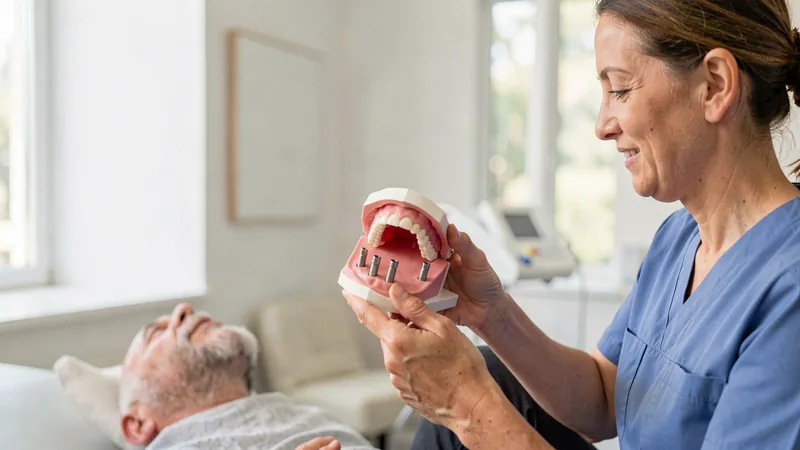
Implant treatment is delivered in stages, and the calendar is the part patients underestimate. The surgery itself is usually one appointment. What fills the rest of the timeline is the planning before it and the healing after it, and the healing stage is the one that cannot be compressed by booking appointments closer together.
The sequence, in order
Implants are usually placed in two stages: surgical placement, then the finished tooth or arch once healing is complete. Around those two sit the planning appointment and the imaging, and before them, if the site needs it, an extraction, a graft or a sinus lift.
So the honest answer to how long it takes is a sequence rather than one number. Planning, then anything the site needs, then placement, then healing while the implant fuses with the bone, commonly three to six months, then the final tooth or arch.
What that means for planning: a single implant in a site with good bone and a full arch on four implants are not the same length of treatment. Both run through planning, placement and healing, but the number of visits, the temporaries and the graft question differ, and those are what to ask about in Chicago.
The stages at a glance
The same sequence on one line per stage, with a note on where the time actually goes.
| Stage | What happens | Where the time goes |
|---|---|---|
| Planning | Examination, CT scan and a plan drawn from it | Imaging and planning, published at $100 - $500 |
| Site preparation | Extraction, graft or sinus lift if the CT shows one is needed | Its own healing period before placement |
| Placement | The implant, or several, placed surgically | Usually a single appointment |
| Healing | The implant fuses with the bone | Commonly three to six months |
| Final teeth | The finished tooth or arch is made and fitted | After healing is complete |
Read the table as a sequence rather than a menu. Nothing in the site preparation stage can be skipped if the imaging calls for it, and nothing in the healing stage can be brought forward, so the dates you are given should always describe the order the stages run in.
Stage one: planning, where the plan is decided
The CT scan is what turns a rough idea into a plan. Where bone is too thin, a graft or a sinus lift is decided from the scan rather than from the tooth count, so the imaging stage is also the stage that settles the cost question.
Ask at this appointment which implant system is proposed, whether a graft is in the plan, and what the temporary would be while the site heals. Those three answers decide the shape of the calendar that follows.
Ask for the plan in writing at this point: how many implants, where they go, whether a graft is included, and what the imaging showed at each site. A plan that names the sites can be compared with a second opinion; a plan that only names a price cannot.
Stage two: anything the site needs first
If a failing tooth is still in place it is extracted, published at $150 - $600, and the site is then assessed for healing before or alongside placement. Where the ridge has shrunk after tooth loss, a graft or ridge augmentation rebuilds the site, published at $600 - $3,000 per site.
In the upper back jaw a sinus lift does the same job where the bone under the sinus is too thin. The important part is the order: a graft has its own healing time before the implant stage, so a graft means two waits rather than one.
If two items are needed, ask whether they happen in one appointment or two, because sedation and surgical fees are charged per visit. Combining an extraction with a graft in a single sitting is a plan decision the dentist makes, and the answer changes the calendar.
Stage three: placement day
The implant is placed in a surgical appointment. In a simple case that is one sitting; a full-arch plan places four implants in the same sitting. Sedation, if it is used, is charged per visit as its own line: oral conscious sedation is published at $150 - $500 per appointment, and IV sedation is quoted higher.
Ask what you leave with. A single implant may be left to heal under the gum or given a temporary tooth, depending on the plan, and that answer changes how the next few months look.
Placement is the appointment people dread and, in terms of the calendar, the smallest part of it. Ask what the day involves, how long you are in the chair, who performs the surgery, and whether the sedation is provided by the same dentist or brought in for the appointment.
The healing stage: three to six months
Osseointegration, the implant fusing with the bone, commonly takes three to six months. Nothing in that stage speeds up because the next appointment is booked sooner, which is why the calendar runs in months rather than weeks.
In some full-arch cases a temporary bridge is loaded on the day of surgery, so the patient is not without teeth during healing, and the final prosthesis follows once healing is complete. Ask whether your plan includes a temporary, and whether it is fixed or removable.
Use the healing period for the decisions that are still open: the material for the final teeth, the maintenance routine, and who will adjust the prosthesis if it ever needs adjusting. Those choices can be settled while the bone is doing its work rather than on the day the final teeth are fitted.
The final teeth, and why they wait
The final tooth or arch is made and fitted once healing is complete. That is what the published figures describe: an implant with the finished crown at $3,000 - $5,000, or a full arch at $15,000 - $30,000.
This is also the appointment to settle the material question. Acrylic, nano-ceramic and zirconia arches all appear in published comparisons, with zirconia usually at the top of the range, and the choice shows up in the fee and in the maintenance routine afterwards.
This is also the stage where the material and cost of the final teeth is settled, since the published bracket for a full arch runs from $15,000 to $30,000 per arch depending on that choice and on the number of implants. Ask which end of the bracket the proposed plan sits at, and why.
Where a graft adds time, and how to get a real calendar
A graft inserts its own healing period between the extraction and the implant, so the sequence grows by a stage rather than by a few days. If you have been told a graft is likely, ask for the sequence in writing with both healing periods shown.
Then ask how many visits each stage takes, what happens if the site heals more slowly than expected, and what you wear in the meantime. A practice that answers those three in writing has given you a calendar; one that answers with a single total has given you a hope.
A practice that gives you the sequence in writing is also a practice you can hold to it. If the later appointment dates move, the written sequence tells you which stage moved, and whether the reason was healing, laboratory work or scheduling.
Frequently asked questions
How long do dental implants take from start to finish?
The sequence is planning, then anything the site needs, then surgical placement, then healing, commonly three to six months while the implant fuses with the bone, then the final tooth or arch. Placement itself is usually a single appointment, and a graft adds its own healing stage before the implant.
Can the healing period be shortened?
Not by scheduling the final teeth earlier. Osseointegration commonly takes three to six months and the final prosthesis follows once healing is complete. In some full-arch cases a temporary bridge is loaded on the day of surgery, but that is about the interim teeth rather than a shorter healing stage.
Do I go without teeth while the implant heals?
Ask whether a temporary is part of the plan. Some full-arch cases load a temporary bridge on the day of surgery, and a single implant may be left to heal under the gum or fitted with a temporary tooth, depending on what the dentist plans for that site.
Is the CT scan always needed?
It is the stage that answers the graft question, and it is published at $100 - $500 together with the planning. Without it the plan and the fee are provisional, because whether a graft is needed is decided from the imaging rather than from the tooth count.
Sources
Related




Dental Implants services in Chicago
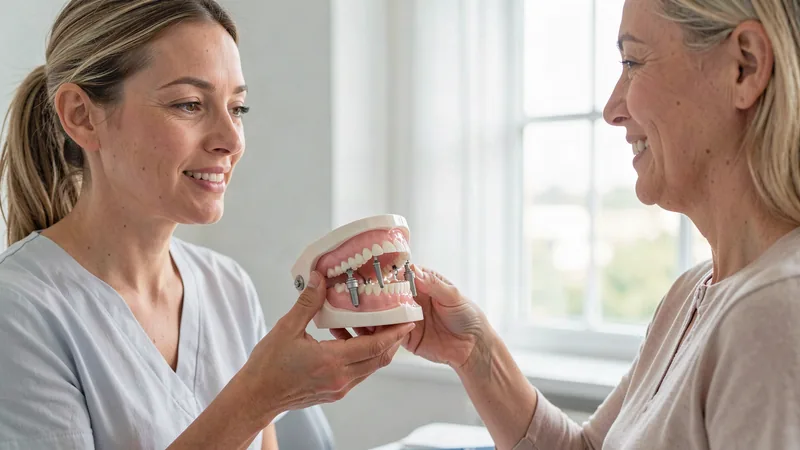
All On 4 Implants
All-on-4 is a full-arch option: four implants placed in the jaw, carrying a fixed arch of teeth. Published 2025-2026 United States cost guides put it at $15,000 - $30,000 per arch, with higher-end zirconia arches quoted above that.

Full Mouth Dental Implants
Full mouth implants means rebuilding both arches. Published 2025-2026 United States guides carry per-arch figures rather than a both-arches figure, so a two-arch plan is compared arch by arch, itemised.
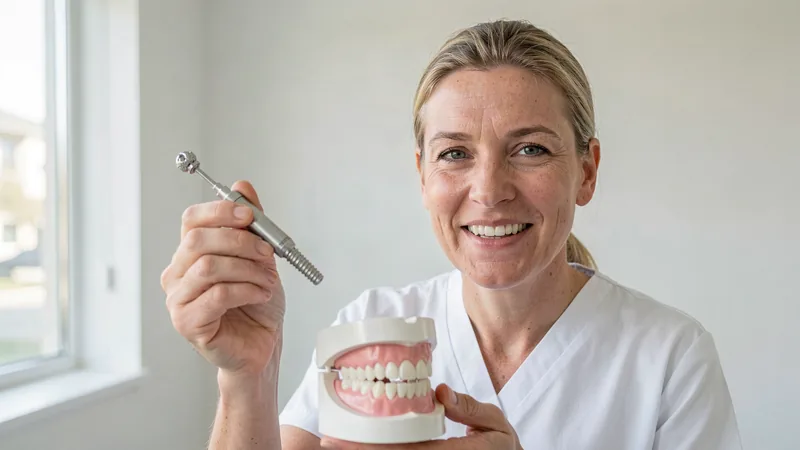
Single Tooth Implants
A single implant replaces one tooth: a fixture in the jaw, an abutment, and a crown on top. Published 2025-2026 United States guides put the finished tooth at $3,000 - $5,000, with some guides to $6,000 where a graft is needed.
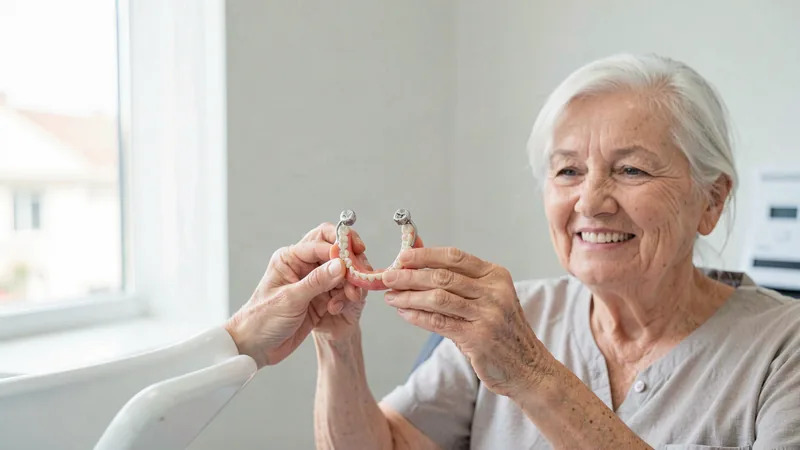
Implant Supported Dentures
An implant-supported denture is held by two to four implants and still comes out for cleaning. Published 2025-2026 United States guides put it at $6,000 - $15,000 per arch, against $15,000 - $30,000 per arch for a fixed full arch.

Bone Grafting
A graft rebuilds bone where the ridge has shrunk too far for an implant. Published 2025-2026 United States guides put bone graft or ridge augmentation at $600 - $3,000 per site, and the decision comes from the CT scan rather than from how many teeth were lost.

Implant Maintenance
Implants need cleaning and review after they are fitted. Peri-implantitis - inflammation around the implant - is the failure mode that follow-up appointments are looking for, and it is the reason the aftercare side of a quote deserves the same attention as the surgery.
Areas we serve

Chicago
Dental Implants in Chicago, IL - costs, water and soil notes.

Evanston
Dental Implants in Evanston, IL - costs, water and soil notes.

Oak Park
Dental Implants in Oak Park, IL - costs, water and soil notes.
Cicero
Dental Implants in Cicero, IL - costs, water and soil notes.

Berwyn
Dental Implants in Berwyn, IL - costs, water and soil notes.

Skokie
Dental Implants in Skokie, IL - costs, water and soil notes.

Des Plaines
Dental Implants in Des Plaines, IL - costs, water and soil notes.

Park Ridge
Dental Implants in Park Ridge, IL - costs, water and soil notes.

Niles
Dental Implants in Niles, IL - costs, water and soil notes.

Elmwood Park
Dental Implants in Elmwood Park, IL - costs, water and soil notes.

Norridge
Dental Implants in Norridge, IL - costs, water and soil notes.

Lincolnwood
Dental Implants in Lincolnwood, IL - costs, water and soil notes.

Morton Grove
Dental Implants in Morton Grove, IL - costs, water and soil notes.

River Forest
Dental Implants in River Forest, IL - costs, water and soil notes.
Dental Implants tools & calculators
All 10 free Dental Implants tools
Cost calculators, comparisons and checklists. No sign-up.
Cost calculator
Estimate the range for a case in about a minute.

Cost guide
Every published appliance range, in one page.

Consultation checklist
What to bring and what to ask before you commit.

Knowledge quiz
Ten questions on costs, timing and coverage.

Which option fits my situation
Eight questions that point to an appliance path.

Cost & Payment tools
Cost estimator, financing and payment planning, insurance and what you may still owe

Cost & coverage tools
Cost driver planner, insurance and code checker, multi-stage cost planner

Compare & choose tools
Treatment finder and practice comparison scorecard
Prepare & safety tools
Appointment question builder, readiness checklist, medical-history and medication notes

Checklists & Answers tools
Practice questions, records and imaging checklist, second opinion, smile check