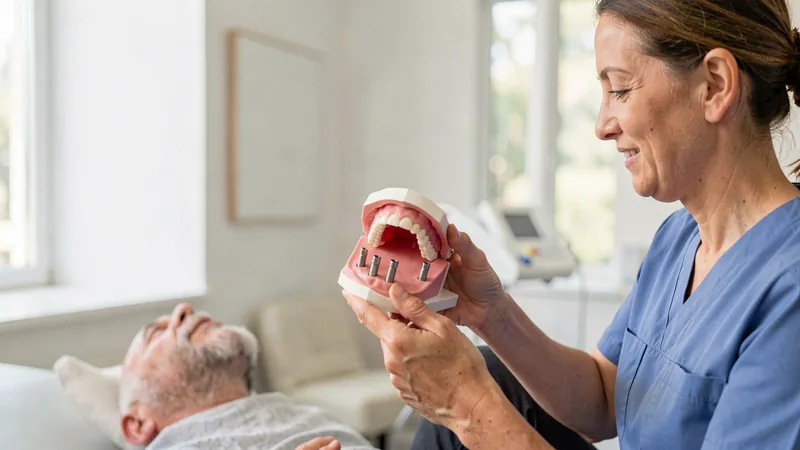
A graft is proposed when the bone at a particular site is not enough for the implant the plan needs. That is a statement about one spot in the jaw, not about your age or your general health. The reason it comes up at all is that bone changes after a tooth is lost, and that change does not reverse on its own.
What happens to the ridge after a tooth is lost
The ridge shrinks after a tooth is lost, and the change continues over time. That is why a site that has been empty for years usually shows less bone than a site where the tooth came out recently.
It does not follow that every empty site needs grafting. It means the site has to be measured before anything is planned there, and the CT scan is what does the measuring.
Patients usually reach this question after being told a graft is likely, and the useful distinction is between a general statement about bone loss and a measurement at one spot. The ridge under a missing back tooth changes differently from the ridge under a missing front tooth, and only the imaging shows which is which in your mouth.
What a graft actually does
A graft, also called ridge augmentation when it is rebuilding the ridge, adds bone to the site so the planned implant has something to sit in. It is done before the implant stage and heals before the implant is placed.
It is published at $600 - $3,000 per site. Per site is the word that matters: a plan with two thin areas is not the same quote as a plan with one, and the fee can be charged for each site that needs rebuilding.
That is why a graft appears as its own line in the published ranges rather than being folded into the implant fee. It is a distinct procedure with its own appointment, its own healing period and its own fee band, performed at the site where the implant is planned rather than across the whole jaw.
The sinus lift, and why it is an upper-jaw question
In the upper back jaw the roots of the teeth sit close to the sinus, and once those teeth are gone the bone between the mouth and the sinus can be too thin for an implant. A sinus lift raises that floor and adds bone, and it is decided from the same CT scan.
It is a graft for a specific site rather than a different treatment, and it carries its own healing time before the implant stage. If a plan mentions a sinus lift, ask which side it covers and how many sites are involved.
Patients often ask whether a sinus lift is a bigger operation than a graft. What the published material supports is that it is the same class of procedure at a site where the anatomy is different, and it is the same question for the quote: how many sites, and charged per site or per arch.
How the decision is actually made
The decision comes from the CT scan, not from the tooth count and not from how long the gap has been there. That is the most useful thing to know about grafting: it is an imaging finding, so it cannot be assumed in advance and it cannot be argued away afterwards.
The scan and the planning that follows it are published at $100 - $500. This is the appointment where a graft stops being a worry and becomes either a line in a quote or a question that is off the table.
Two practical consequences follow. A quote given before the scan is provisional, and a graft cannot be ruled in or out over the phone. If a practice proposes a graft without imaging, ask what the scan would add to the plan before agreeing to it.
What a graft adds to a quote
A graft is published at $600 - $3,000 per site and is normally a separate line in the quote. An extraction, if a failing tooth is still in place, is published at $150 - $600, and the CT scan and planning sit at $100 - $500.
Ask whether the graft fee is per site or per arch, whether more than one site is expected, and what the plan does if more material is needed at the appointment. Those three questions turn a published range into a number you can plan around.
One more question is worth asking: what the graft fee covers if the surgeon finds the site needs more material than the scan suggested. The published range is wide, and the answer is the difference between a fixed price and an open one.
Timing: the graft heals before the implant
Where a graft or a sinus lift is needed it is done first and has its own healing time before the implant stage, so the sequence gains a stage and the calendar grows with it.
A graft is therefore not only a cost line. If treatment time matters to you, ask for the sequence in writing with both healing periods shown, and ask what the temporary is while the graft site matures.
Ask how the graft is reviewed before the implant stage: whether a further scan confirms the site is ready, and what happens if it is not. That review is the checkpoint the sequence depends on, and knowing it exists is part of knowing what you are paying for.
Questions to ask before you agree to a graft
What does the CT scan show at this site, and how thin is it. Is that a graft, a ridge augmentation or a sinus lift, and which site does each fee cover. What happens if more material is needed during the appointment. Will there be a further scan before the implant stage.
Ask for the answers inside the written plan, not only in conversation. A practice that answers these four plainly is the practice you can compare against another.
Then compare the answers with a second practice looking at the same imaging. Two dentists can plan different numbers of implants, different positions or a different graft from one scan, and seeing that difference is more useful than comparing two prices for a plan you have not seen.
Second opinions and the lower-cost routes
A graft proposal is a reasonable thing to have a second opinion on, especially where the plan is a full arch. A second opinion is not an insult to the first dentist; it is how you find out whether a different implant position, or a different number of implants, changes the answer.
Chicago has two dental schools that treat the public at reduced fees, the UIC College of Dentistry and the Midwestern University College of Dental Medicine-Illinois in Downers Grove. The NIDCR Finding Dental Care page points to this class of clinic. They are routes to check, not recommendations.
Reduced-fee clinics are not a lower standard of care, but they are slower: appointments are spaced around teaching, and a case is usually treated in stages by students working under supervision. That is the trade the lower fee buys, and it is worth knowing before joining a waiting list.
Frequently asked questions
Do I need a bone graft before an implant?
It depends on the bone at the site. The ridge shrinks after a tooth is lost, so a site that has been empty for a while is more likely to be assessed for grafting, but the answer comes from the CT scan rather than from the tooth count or from the age of the gap.
How much does a bone graft cost?
Published ranges put a bone graft or ridge augmentation at $600 - $3,000 per site, usually quoted as its own line on top of the implant fee. The CT scan and planning that decide whether a graft is needed are published at $100 - $500.
What is the difference between a graft and a sinus lift?
Both rebuild bone at a specific site. The sinus lift is the version used in the upper back jaw, where the bone between the mouth and the sinus is too thin. Both are decided from the imaging, and both have their own healing time before the implant stage.
Can I have the implant without the graft?
That is a clinical decision for the dentist. Ask what the alternative plan is at that site, whether fewer or differently placed implants change the answer, and ask them to show you the reasoning on the CT scan before you decide.
Sources
Related




Dental Implants services in Chicago

All On 4 Implants
All-on-4 is a full-arch option: four implants placed in the jaw, carrying a fixed arch of teeth. Published 2025-2026 United States cost guides put it at $15,000 - $30,000 per arch, with higher-end zirconia arches quoted above that.

Full Mouth Dental Implants
Full mouth implants means rebuilding both arches. Published 2025-2026 United States guides carry per-arch figures rather than a both-arches figure, so a two-arch plan is compared arch by arch, itemised.
Single Tooth Implants
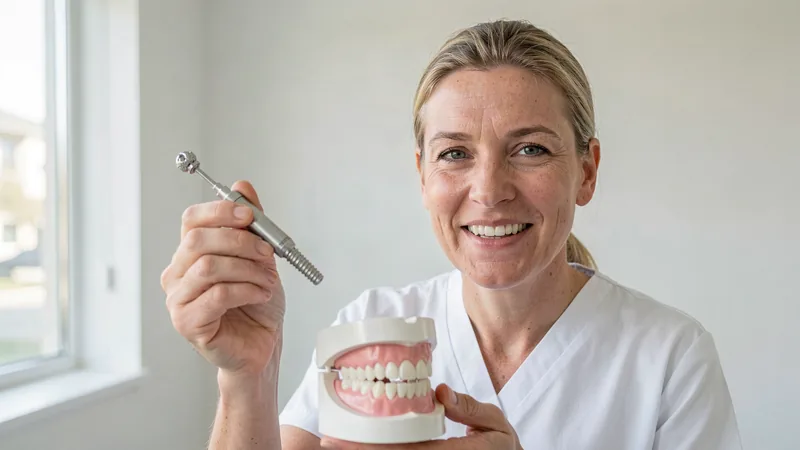
A single implant replaces one tooth: a fixture in the jaw, an abutment, and a crown on top. Published 2025-2026 United States guides put the finished tooth at $3,000 - $5,000, with some guides to $6,000 where a graft is needed.

Implant Supported Dentures
An implant-supported denture is held by two to four implants and still comes out for cleaning. Published 2025-2026 United States guides put it at $6,000 - $15,000 per arch, against $15,000 - $30,000 per arch for a fixed full arch.

Bone Grafting
A graft rebuilds bone where the ridge has shrunk too far for an implant. Published 2025-2026 United States guides put bone graft or ridge augmentation at $600 - $3,000 per site, and the decision comes from the CT scan rather than from how many teeth were lost.

Implant Maintenance
Implants need cleaning and review after they are fitted. Peri-implantitis - inflammation around the implant - is the failure mode that follow-up appointments are looking for, and it is the reason the aftercare side of a quote deserves the same attention as the surgery.
Areas we serve

Chicago
Dental Implants in Chicago, IL - costs, water and soil notes.

Evanston
Dental Implants in Evanston, IL - costs, water and soil notes.

Oak Park
Dental Implants in Oak Park, IL - costs, water and soil notes.
Cicero
Dental Implants in Cicero, IL - costs, water and soil notes.

Berwyn
Dental Implants in Berwyn, IL - costs, water and soil notes.

Skokie
Dental Implants in Skokie, IL - costs, water and soil notes.

Des Plaines
Dental Implants in Des Plaines, IL - costs, water and soil notes.

Park Ridge
Dental Implants in Park Ridge, IL - costs, water and soil notes.

Niles
Dental Implants in Niles, IL - costs, water and soil notes.

Elmwood Park
Dental Implants in Elmwood Park, IL - costs, water and soil notes.

Norridge
Dental Implants in Norridge, IL - costs, water and soil notes.

Lincolnwood
Dental Implants in Lincolnwood, IL - costs, water and soil notes.

Morton Grove
Dental Implants in Morton Grove, IL - costs, water and soil notes.

River Forest
Dental Implants in River Forest, IL - costs, water and soil notes.
Dental Implants tools & calculators
All 10 free Dental Implants tools
Cost calculators, comparisons and checklists. No sign-up.
Cost calculator
Estimate the range for a case in about a minute.

Cost guide
Every published appliance range, in one page.

Consultation checklist
What to bring and what to ask before you commit.

Knowledge quiz
Ten questions on costs, timing and coverage.

Which option fits my situation
Eight questions that point to an appliance path.

Cost & Payment tools
Cost estimator, financing and payment planning, insurance and what you may still owe

Cost & coverage tools
Cost driver planner, insurance and code checker, multi-stage cost planner

Compare & choose tools
Treatment finder and practice comparison scorecard
Prepare & safety tools
Appointment question builder, readiness checklist, medical-history and medication notes

Checklists & Answers tools
Practice questions, records and imaging checklist, second opinion, smile check